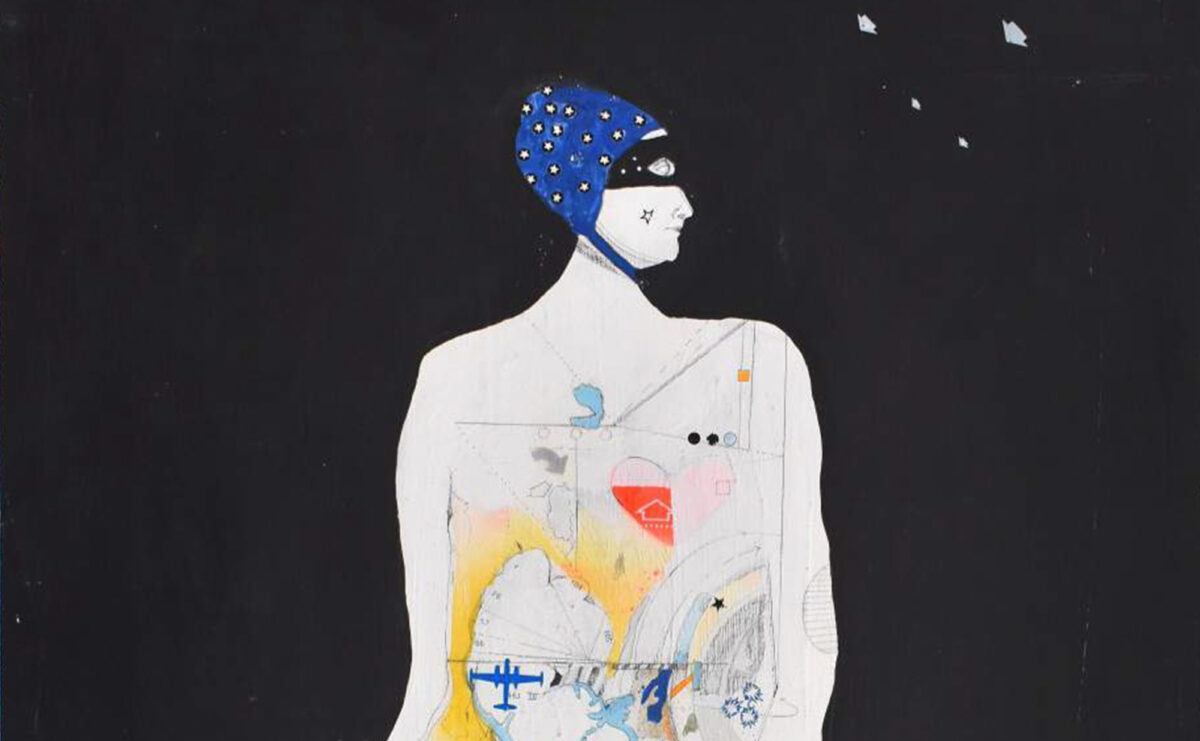
Alice Aycock, Robert Irwin, Matt Mullican, and Robert Venturi are presented in Abstraction for Everyday Life, an exhibition of promised gifts and works on paper from the Museum’s collection. This group of works all utilize forms of architectural drawing, rendering, and sketching to represent abstracted and evocative states and ideas, as well as the opposite—drawing plans made to create functional objects and physical structures whose origins lie in theory and subjective perception.
Architectural drawing is a widely accepted form of abstraction. Its many codes are universally understood and serve to translate a concept from its immaterial state, into a two-dimensional representation, and finally to a three-dimensional material condition inhabiting our everyday life.
Alice Aycock, Robert Irwin, Matt Mullican, and Robert Venturi are presented in Abstraction for Everyday Life, an exhibition of promised gifts and works on paper from the Museum’s collection. This group of works all utilize forms of architectural drawing, rendering, and sketching to represent abstracted and evocative states and ideas, as well as the opposite—drawing plans made to create functional objects and physical structures whose origins lie in theory and subjective perception.
Architectural drawing is a widely accepted form of abstraction. Its many codes are universally understood and serve to translate a concept from its immaterial state, into a two-dimensional representation, and finally to a three-dimensional material condition inhabiting our everyday life.